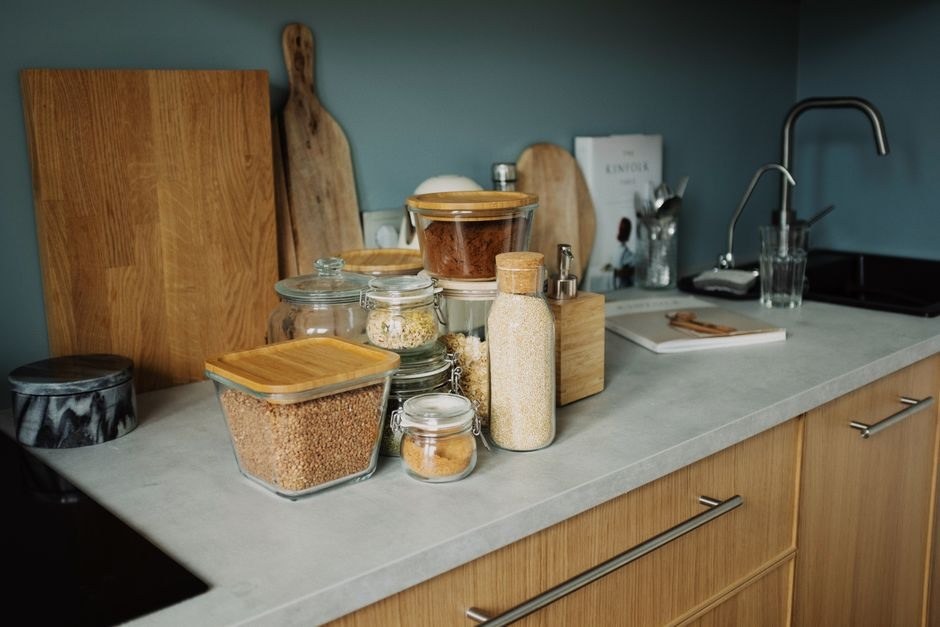
Some kitchens become difficult not because they are too small, but because every surface is carrying a little unfinished business. A mug waits beside the sink, groceries never quite reach the cupboard, a cutting board dries in the only open patch of counter. None of it is serious. Together, though, it makes the room feel as if yesterday is still happening.
Reset the working surface first
The most useful place to begin is the area where breakfast or the first meal of the day will actually be made. Clear one stretch of counter completely. Put away appliances that are not used daily, return ingredients to their usual shelf, and move drying dishes into cupboards once they are ready. The aim is not an empty showroom. It is a clean patch of working space that asks nothing from you in the morning.
A ten-minute reset works because it has a boundary. You are not reorganizing drawers or evaluating every jar in the pantry. You are simply closing the day. If something belongs somewhere obvious, put it there. If it needs a larger decision, place it in one small basket or tray and deal with it later.
Restore the things you reach for automatically
Next, notice the handful of objects that make the kitchen function smoothly: the kettle, coffee or tea, salt, cooking oil, a clean cloth, a favorite knife. Refill or return them now. A jar that runs out at 7:30 in the morning feels disproportionately annoying; the same jar refilled at 8:45 in the evening takes thirty seconds.
This is also a good moment to wipe the sink and counter rather than attempting a full clean. A damp cloth, a quick sweep of crumbs, and an empty basin change the feel of the room immediately. Small maintenance is often more valuable than occasional heroic cleaning because it keeps friction from accumulating.
Leave one helpful cue for the morning
The last step can be almost embarrassingly simple. Put a glass beside the kettle. Set the breakfast bowl where you can reach it. Move tomorrow’s fruit to the front of the shelf. If you know you will pack lunch, place the container on the counter. These tiny cues are not about optimizing every minute; they are about reducing the number of decisions required before the day has properly started.
After a week, the routine becomes less about tidiness than continuity. The kitchen stops feeling like a place that needs to be fixed before it can be used. It is simply ready again, with enough order to support whatever comes next.